Dental health plays a huge role in your pet’s comfort, wellbeing and overall health. Just like people, dogs and cats can develop plaque, tartar and gum disease… and unfortunately, they can’t tell us when their mouth is sore.
In fact, dental disease is one of the most common health problems seen in pets, affecting around 80% of dogs and 70% of cats by the age of three.
At Maleny Vet Services, we provide comprehensive dental care for dogs and cats, from early detection and preventative advice to professional dental cleaning and tooth extractions when needed. Our goal is simple: keep your pet comfortable, pain-free and able to enjoy their food and favourite chew toys for years to come.
Why dental care matters
Dental disease starts with bacteria and food debris forming plaque on the teeth. Over time, this plaque hardens into tartar, which irritates the gums and can lead to infection. Left untreated, dental disease can cause:
- Bad breath
- Painful inflamed gums
- Loose or infected teeth
- Difficulty eating
- Tooth root abscesses
- Spread of bacteria to organs such as the heart, liver or kidneys
Regular dental checks and preventative care can help detect problems early and prevent more serious complications.
Signs your pet may need a dental check
Many pets hide discomfort surprisingly well. If you notice any of the following signs, it may be time for a dental assessment:
- Bad breath
- Yellow or brown tartar build-up on the teeth
- Red or swollen gums
- Drooling more than usual
- Pawing at the mouth or face
- Changes in eating habits
- Pain or bleeding around the gums
If you’re unsure, our team is always happy to take a look and advise on the next steps.
Professional dental procedures
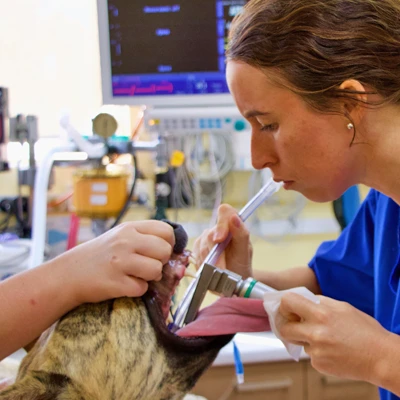
A thorough dental clean requires a general anaesthetic so that we can examine every tooth properly and clean both above and below the gumline safely and thoroughly.
During a professional dental procedure at Maleny Vet Services, we typically:
- Perform a full dental examination and chart all teeth
- Remove plaque and tartar using ultrasonic scaling equipment
- Polish the teeth to slow future plaque build-up
- Assess gum health and check for infection or damage
- With permission from the owner, extract teeth if they are too diseased to be saved
- Provide pain relief and aftercare instructions
Most pets go home the same day once they have recovered from their anaesthetic.
Preventing dental disease at home
Good dental health doesn’t stop when your pet leaves the clinic. We’ll work with you to create a home dental care plan that suits your pet’s lifestyle. Preventative care may include:
- Regular tooth brushing with pet-safe toothpaste
- Dental chews or toys
- Special dental diets
- Raw meaty bones (when appropriate)
- Routine dental checks with your veterinarian
Even small steps can make a big difference in preventing dental disease.
Booking your pet’s dental check
If your pet has bad breath, visible tartar, sore gums, or changes in eating habits, it may be time for a dental check. Early treatment can prevent pain and help avoid more complex dental procedures later.
Our veterinary team can assess your pet’s dental health, discuss treatment options if needed, and help you create a plan to keep their teeth healthy at home.
Pet Dentistry FAQs
How often should my pet have their teeth checked?
Do pets really need professional dental cleaning?
Why does my pet need an anaesthetic for dental cleaning?
How will I know if my pet has dental disease?
What happens if a tooth needs to be removed?
Can dental disease affect my pet’s overall health?
We are open seven days a week so if you have any questions, please give us a call on 5494 3622 or book online!